| View previous topic :: View next topic |
Pete Jones
Site Admin
In: Virginia
|
|
 |
|
| Mick Harper wrote: | | Have I lost the plot? Whose angels? The idea of angels being charged with folly is, I would have thought, a contradiction in terms. |
The Hebrew for "angels" here is MALAK, which is sometimes "king" or "messenger" or "angel of the LORD" according to the translators. Why it is here "angels" instead of "messengers" I have no idea.
|
|
 |
|
 |
|
Mick Harper
Site Admin

In: London
|
|
|
|
| 19. How much less in them that dwell in houses of clay, whose foundation is in the dust, which are crushed before the moth? |
I don't care what anyone says, this is way beyond any metaphoric, symbolic or poetic meaning. It's just plain potty.
| 20. They are destroyed from morning to evening: they perish for ever without any regarding it. |
If I knew who they were, I might take a view.
| 21. Doth not their excellency which is in them go away? they die, even without wisdom. |
I expect so. We have reached the end of Chapter Four and there are still thirty-eight to go. Unless I hear anything to the contrary, I am going to conclude The Book of Job is a bunch of meaningless mumbo-jumbo and stop this experiment here.
Sorry, God, but I've given it my best shot.
|
|
| |
|
|
|
Wile E. Coyote
In: Arizona
|
|
|
|
I think it relates to the earlier angels bit.
God is pure, then you have the less pure angels, then you have man.
Man is from the dust of the earth. God is in heaven. Angels function between earth and heaven as "messengers".
| Behold, he put no trust in his servants; and his angels he charged with folly: |
The problem is that angels can be fallen (folly). therefore the message distorted.
|
|
| |
|
|
|
Boreades

In: finity and beyond
|
|
|
|
| Mick Harper wrote: |
| 18. Behold, he put no trust in his servants; and his angels he charged with folly: |
Have I lost the plot? Whose angels? The idea of angels being charged with folly is, I would have thought, a contradiction in terms. |
With the Angel as the Messenger, sadly, it's a common failing of Senior Management. If you don't like the message, shoot the messenger.
|
|
| |
|
|
|
Pete Jones
Site Admin
In: Virginia
|
|
|
|
In Chapter 36, where it gets good, Job's friend Elihu has decided to chastise Job and all his friends. He talks about God (Hebrew: El) and "Elihu" means "He is my God," so it's all a bit on the nose.
I think the last chapters of Job are dripping with very familiar myths:
El is a Thunder God:
Verse 29: who can understand how...the thunder roars from His pavilion?
Verse 30: See how He scatters His lightning around Him...
Verse 32: He fills His hands with lightning and commands it to strike his mark |
This Thunder and Lightning, Zeus-esque talk continues into Chapter 37, but it gets tedious.
There is one interesting aspect about it though: The thunder is his voice, so El speaks calamity into existence just like Yahweh spoke creation into existence in Genesis 1.
|
|
| |
|
|
|
Pete Jones
Site Admin
In: Virginia
|
|
|
|
In Chapter 37, things start to get better.
El is a Thunder God, but he's also the Sun God
Verse 21: Now no one can gaze at the sun
when it is bright in the skies
after the wind has swept them clean.
Verse 22: Out of the north He comes in golden splendor;
awesome majesty surrounds Him. |
He's from the North Pole, and he's golden. This is the Golden Age myth where the Sun God is perched above the North Pole, which makes no astronomical sense.
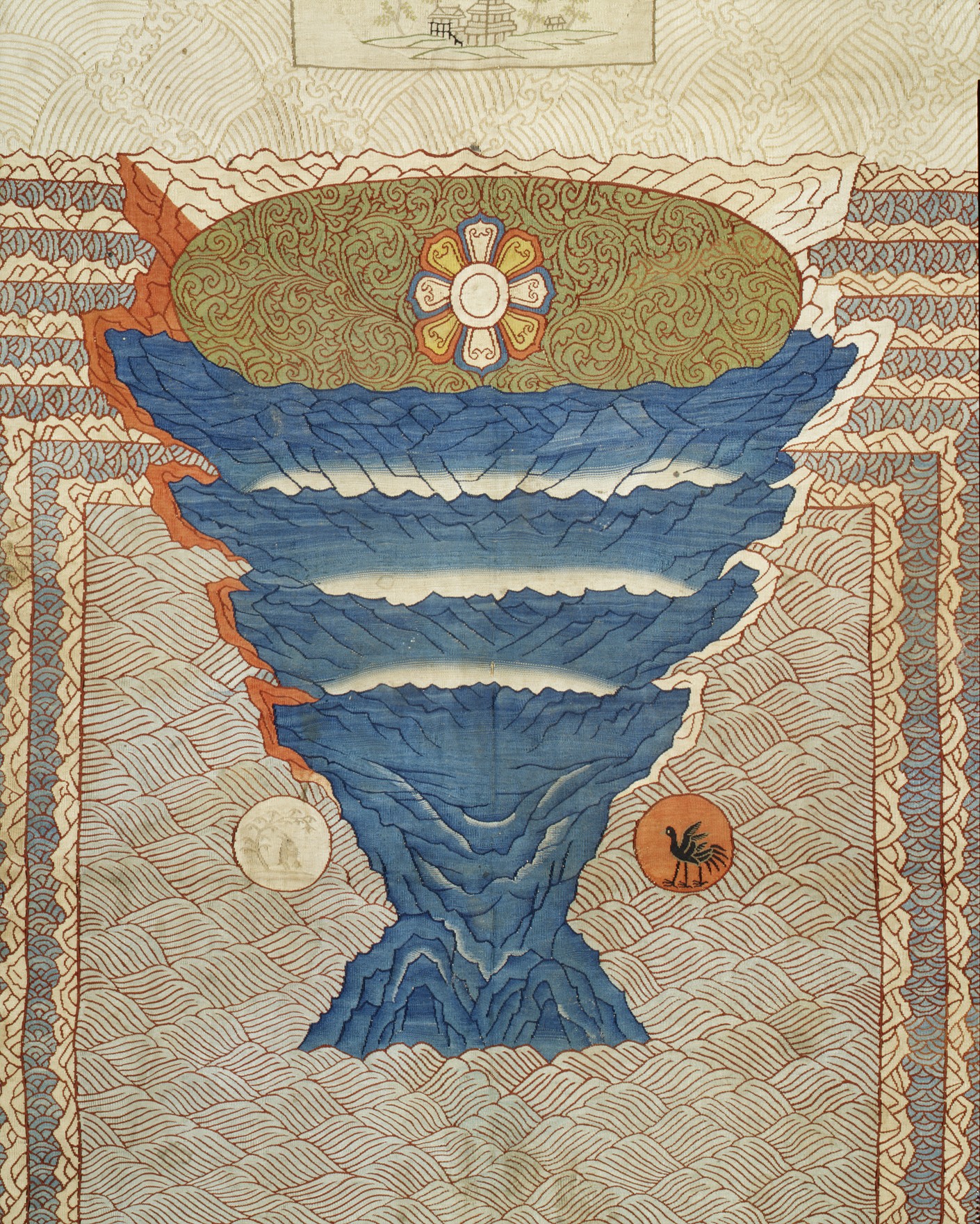
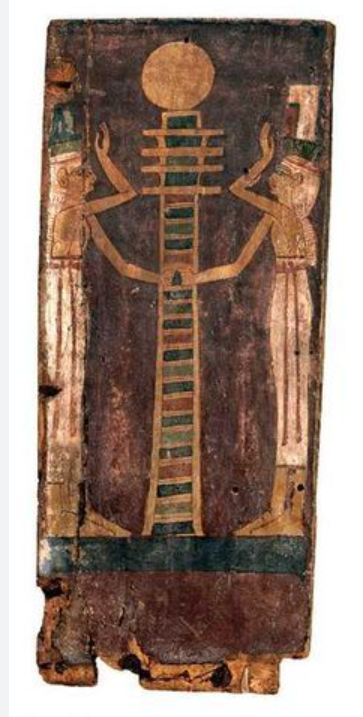
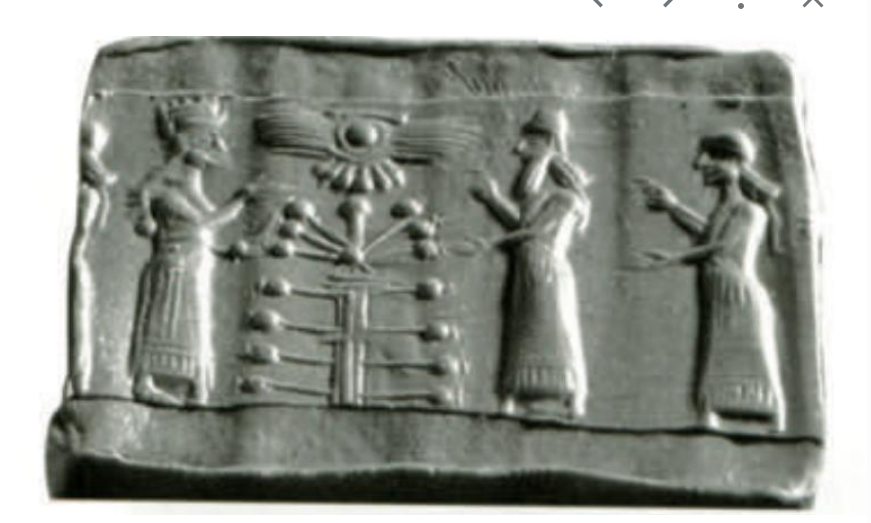
There are lots of these images. The cosmic mountain/tree/mill/pillar of myth with a Sun Disc or Winged Sun Disc at the top of it. The pillar, according to Hamlet's Mill (and everyone else) is at the North Pole, and the world circles around it. There are lots of examples:
China's Cosmic Mountain (Mt Meru) with Sun at top (and two dots on either side, like squatterman, just sayin'):
Cosmic Pillar, with Sun at top:
Cosmic Tree with Winged Sun Disc on top
Cosmic Mill (churning of the milk ocean myth) with a god sitting on top of the sun
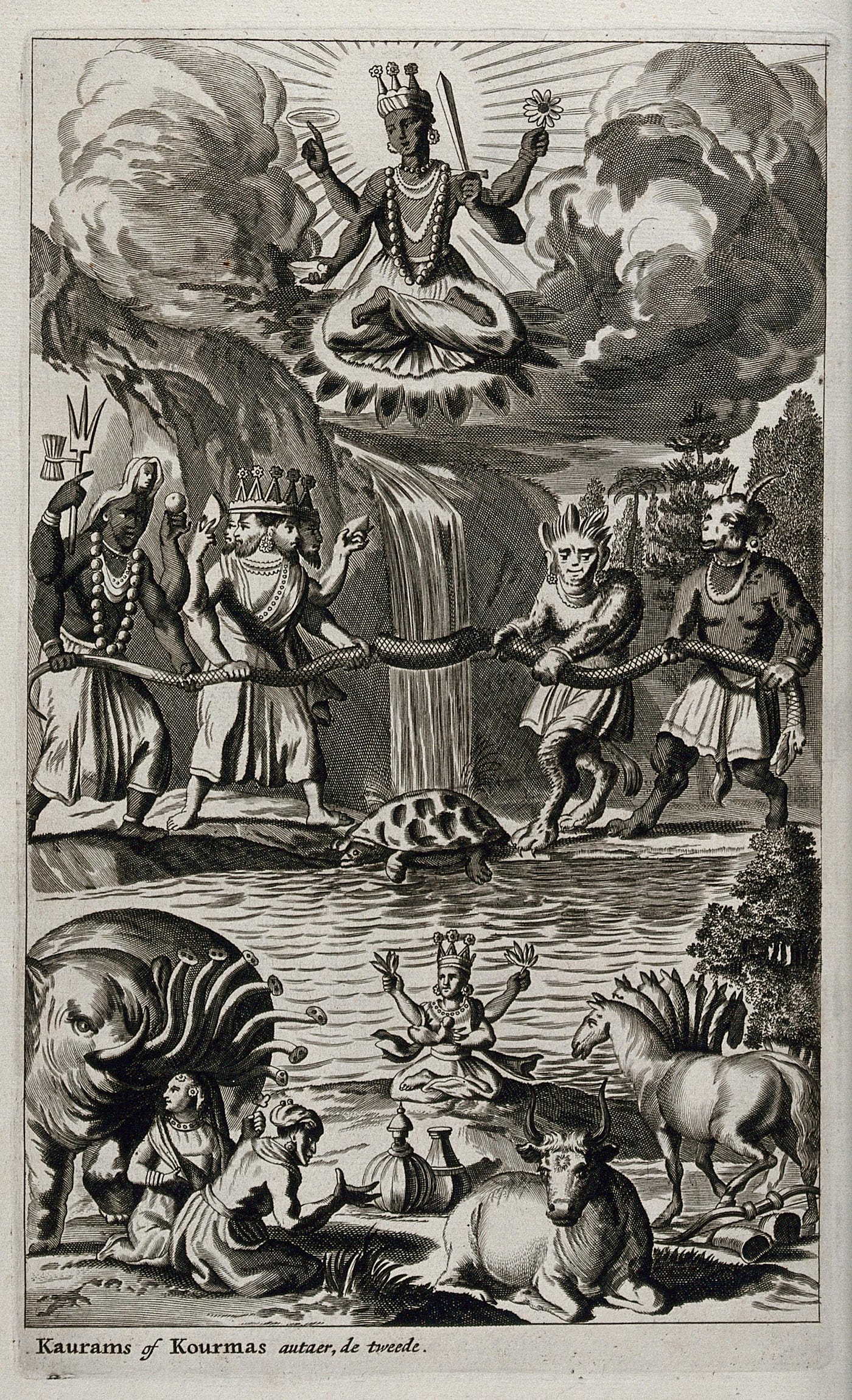
I like that the cosmic mill is on a turtle (putting a pin in that here for future reference)
Anyway, I think Job is using the same imagery. North Pole with the Sun God in his Golden Age splendor on top. That El is both a Thunder God and a Sun God might be either evidence that Israelites really did collapse a pagan pantheon into a monotheism....or, that paganism was a fragmentation of the original one god.
|
|
| |
|
|
|
Wile E. Coyote
In: Arizona
|
|
|
|
|
A rising sun image on ancient coins is very common and occurs across multiple cultures.
|
|
| |
|
|
|
Pete Jones
Site Admin
In: Virginia
|
|
|
|
The end of Job is astrology/myth-talk for about 4 chapters. The Thunder God speaks "out of the whirlwind" and asks Job a bunch of rhetorical questions:
Canst thou bind the sweet influences of Pleiades, or loose the bands of Orion?
canst thou guide Arcturus with his sons?
Knowest thou the ordinances of heaven? canst thou set the dominion thereof in the earth? |
Then El proceeds to give a list of animals, which seem to me to be zodiac constellations: lion, raven, goat, unicorn, etc. I'll spare you the details.
But then it gets really finally interesting, with Behemoth and Leviathan.
|
|
| |
|
|
|
Pete Jones
Site Admin
In: Virginia
|
|
|
|
Behemoth
| Behold now behemoth, which I made with thee; he eateth grass as an ox. |
Vegetarianism is clearly stated. But "made with thee" is ambiguous. Made with Man in Creation Week, or made in collaboration with thee? God knows.
| his strength is in his loins, and his force is in the navel of his belly. |
"Strength in loins" suggests something sexual. But "force in his navel" suggests the cosmic pillar again, with the Omphalos stone being the center of the world. Given the Hebrew style of saying the same thing twice, I think that the Loins and Navel strength both refer to the same thing: cosmic pillar/penis.
He moveth his tail like a cedar: the sinews of his stones are wrapped together.
His bones are as strong pieces of brass; his bones are like bars of iron. |
Biblical Creationists say this means Behemoth is a Brontosaur of some sort. You can see their point. How revisionist should we be in our chronology?
| He lieth under the shady trees, in the covert of the reed, and fens. |
But he fits under trees and between reeds. Combined with the cedar-like tail movement, this is sounding like a crocodile. But that violates vegetarianism. God knows.
|
|
| |
|
|
|
Pete Jones
Site Admin
In: Virginia
|
|
|
|
Leviathan
Canst thou draw out leviathan with an hook? ....
Canst thou fill his skin with barbed irons? or his head with fish spears |
Because this is all astrology-myth talk, we expect a sea monster to be involved.
By his neesings a light doth shine, and his eyes are like the eyelids of the morning.
Out of his mouth go burning lamps, and sparks of fire leap out
Out of his nostrils goeth smoke, as out of a seething pot or caldron.
His breath kindleth coals, and a flame goeth out of his mouth. |
Our sea monster is also a fire-breathing dragon. Conflating the two is interesting to me. Does this indicate it's a very old story, or that it's a relatively late story that mixed familiar genres together? (Or are fire-breathing sea monsters a thing that I don't know about?)
(Funny that in 1611, "to sneeze" was apparently "to neese.")
|
|
| |
|
|
|
Pete Jones
Site Admin
In: Virginia
|
|
|
|
Still about Leviathan:
He maketh the deep to boil like a pot:
he maketh the sea like a pot of ointment.
He maketh a path to shine after him;
one would think the deep to be HOARY. |
"Hoary" is related to "hairy," as demonstrated by the New International translation:
It makes the depths churn like a boiling caldron
and stirs up the sea like a pot of ointment.
It leaves a glistening wake behind it;
one would think the deep had WHITE HAIR. |
This is comet talk now. The sea monster or the dragon (in the Velikovskyan view) is the horrible side of the Mother Goddess Venus. She has crazy hair -- even snakes for hair if you're a Gorgon like Medusa.
|
|
| |
|
|
|
Pete Jones
Site Admin
In: Virginia
|
|
|
|
And Gorgon is a sea monster, explicitly. Look at the parents according to Wiki:
| According to Hesiod and Apollodorus, the Gorgons were daughters of the primordial sea-god Phorcys and the sea-monster Ceto, and the sisters of three other daughters of Phorcys and Ceto, the Graeae. |
The nice version of the sea monster/Mother Goddess rides in on a clamshell -- from the sea. The nasty version forms the spiraling monster of the deep, a dragon. Both have long hair, because both are versions of the Venus comet.
|
|
| |
|
|
|
|
 The Library Index
  FAQ
FAQ  Search
 Register
 Profile
  Log in to check your private messages
  Log in
