| View previous topic :: View next topic |
Pete Jones
Site Admin
In: Virginia
|
|
 |
|
I'm starting to think this M J Harper is onto something when he said "Linguistics is bollocks" (loose paraphrase).
Here is a small scoop from what is a big, big barrel of coincidences....
The Sun is "shamash" in Hebrew (from this we get Samson)
The Cosmic Pillar is "sammas" in Finnish.
This is allegedly related to "sampo," the Finnish version of the Cosmic Mill.
This is allegedly from a Sanskrit word, "skambha," which means Pillar, stability, to prop, to support.*
Why does this vex me so? Because the Cosmic Pillar/Mill/Tree/Mountain myth is very important (I think) in the world, to this day.
For tomorrow, what all this has to do with Saturn....
_________________________________
Featured heavily in Hamlet's Mill, which goes into the Sampo and Skamba in great detail
|
|
 |
|
 |
|
Mick Harper
Site Admin

In: London
|
|
|
|
|
What do you call someone who studies mytholinguistics? A 'mytholinguist' makes them sound non-existent, which is reasonably true but misleading. So I'd plump for a mytholingam, though I don't know what you would call a lady mytholingam.
|
|
| |
|
|
|
Pete Jones
Site Admin
In: Virginia
|
|
|
|
I forgot to point out that Samson is well known for having pulled down the pillars on everyone's head, "killing more in death than he killed in life." Since the man once killed 1,500 (of a Tuesday afternoon, probably) with the jawbone of an ass, this means there was at least that many within the palace when he pulled down the pillars. This all smacks of mythology rather than reality.
And this is after he was turning the Mill, eyeless in Gaza.
|
|
| |
|
|
|
Mick Harper
Site Admin
In: London
|
|
|
|
|
Don't forget Saint Samson. He did prodigies of good work converting 'Celts' in western England, Wales, the Channel Islands and Brittany from Christianity to... er... Christianity.
|
|
| |
|
|
|
Pete Jones
Site Admin
In: Virginia
|
|
|
|
So we have Shamash for the sun, and Sammas for the Cosmic Pillar. So why do we have Samstag in German and why does it mean Saturn's Day instead of Sun's Day?
"Samstag” is Saturday in German and
“Samedi" in French
But both of these are said to come from Ancient Greek’s "Sabbaton," which of course is related to
The Hebrew word for the day of rest, “Sabbath” or “Shabbat”
Spanish’s “Sabado” sure looks like "Sabbath," but how do the linguists think it came to be?
They say the Byzantine Greeks added an M into Sabbath, and this word must have been “*Sambaton” (the asterisk meaning the word is completely inferred, not found in texts). Or, they say it was a Vulgar Latin word, also with an added M, “*Sambatum” (the asterisk still means it’s made up).
Spanish (Sabado) resisted adding the M, but the French and the Germans did not (Samedi and Samstag), while also dropping the B. Romanian kept both, with "Sâmbata," and one assumes that the Romanian word is why the Vulgar Latinists arrived at this pathway.
So, while you might think that Saturn’s Day or Sams Tag should NOT look exactly like Shamas’ Day (i.e., SUNday), that’s just the way it is.
The linguists’ explanation implies there is no confusion between Saturn and the Sun, there are simply two made-up word with two made-up Ms, and after all, Romanian still has both – and that wipes away any problems. But this looks to me like classic ad hockery to save a theory.
For tomorrow, is there any actual confusion between Saturday and Sunday? Between Saturn and the Sun?
|
|
| |
|
|
|
Pete Jones
Site Admin
In: Virginia
|
|
|
|
| Mick Harper wrote: | | Don't forget Saint Samson. He did prodigies of good work converting 'Celts' in western England, Wales, the Channel Islands and Brittany from Christianity to... er... Christianity. |
Jawboning like an ass?
|
|
| |
|
|
|
Mick Harper
Site Admin
In: London
|
|
|
|
|
No, I was trying to be helpful.
|
|
| |
|
|
|
Pete Jones
Site Admin
In: Virginia
|
|
|
|
In case I was being too opaque, I was just trying to make a Samson joke about what St Samson might have been doing.
Sending Christian missionaries to Christendom is a really weird historical "fact". Maybe it was like the Mormons trying to save the heathen Manhattanites.
|
|
| |
|
|
|
Pete Jones
Site Admin
In: Virginia
|
|
|
|
Saturday or Sunday? Is there really any confusion?
In very old texts one of the earliest names for Saturn was Helios (i.e., Sol). Here’s the AI overview of it, which pulls from an article co-written by Marinus van der Sluijs and Peter James*:
Chaldean/Babylonian Influence: The historian Diodorus Siculus reported that the Chaldeans referred to Saturn as "Helios" or the "Sun-star". They viewed it as the most "conspicuous" of the wandering stars.
Astra Planeta: Some classical sources refer to Saturn as the "Star of Helios" (Aster Heliou) or the "Star of Sol".
Eratosthenes: The scholar Eratosthenes noted that some called Saturn "Phaethon," Helios’ son. So, Saturn and the Sun were once using the same word(s) or were more closely related (father and son) than you might expect.
As a born-again Baptist and chronology skeptic, I wonder if the current confusion between which weekend day is officially the Lord’s Day can really go back to the Chaldeans? Although I'm glad that church ruined my Sunday rather than my Saturday, otherwise, going to "Saturday School" right after real school would have felt like I had only a one-day weekend.
For tomorrow, what all this has to do with the Cosmic Pillar/Tree/Mill/Mountain
________________________________________
*https://www.ub.edu/ipoa/wp-content/uploads/2021/08/20132AuOrVanderSluijs.pdf
|
|
| |
|
|
|
Mick Harper
Site Admin
In: London
|
|
|
|
| As a born-again Baptist and chronology skeptic |
That would appear to be one paradigm shift too many. Might be considered skittish.
|
|
| |
|
|
|
Wile E. Coyote
In: Arizona
|
|
|
|
Saturday has always been the (sabbath) rest day, end day, cease (sixth) dark day.
Sunday has always been the ressurected start of the week. (new light)
Which day you worship, attend your church/synagogue is really down to your spiritual leaders.
Its not really something you need to think about.
|
|
| |
|
|
|
Mick Harper
Site Admin
In: London
|
|
|
|
The concept though is worth thinking about. There is no overwhelming reason to impose seven-day chunks on society. Any other segmentation of 365/6 days--or none at all--would be entirely feasible.
Still, it seems that seven days is what civilised human beings have mostly opted for. That's six days of work and one of rest. Presumably it was found to be optimal in terms of keeping everyone hard at it. But the question then becomes 'What to do with the Seventh Day?'
Just having a lie-in and pottering round the house is what civilised (working) human beings would probably opt for but someone--the state? nascent religions? garden centres?--spotted an opportunity. That's the way I see it.
|
|
| |
|
|
|
Pete Jones
Site Admin
In: Virginia
|
|
|
|
If Shamash is the Sun and Sammas and Skambha are the Cosmic Pillar, at minimum, we can see that astronomy and myth are mixing together.
An interesting side note is that Skambha (Sanskrit) also means “stability.” The Cosmic Pillar would need to be stable, I suppose, or it wouldn’t be much of a pillar. (Because Sanskrit is infinitely confusing, Skambha is also Sthamba.*)
But the thing about the Cosmic Pillar/Tree/Mountain is that it was famously unstable. It collapsed, ending the Golden Age, bringing the Flood, and ushering in our post-Golden Age fallen state.
Here's where I worry that pattern recognition is running amok. Look at the following Ancient Greek words:
Skambos = crooked, bent, bowlegged
Skimbos = lame
I'll spare you the quote, but even Wiktionary cites the mainstream saying these words are very closely related.
This all raises some questions:
Why was Saturn the "Father of the Gods" who reigned during the Golden Age?
Why not the Sun (yaknow, the big gold thing in the sky)?
Why is Saturn "the lame planet," and the god who walks around on a crutch?
Is it because he was related to the Cosmic Pillar which eventually collapsed?
Did the stable god become lame, bow-legged, bent?
Is the connection right there in the words themselves?
Does this say anything about the relative ages of Sanskrit and Greek?
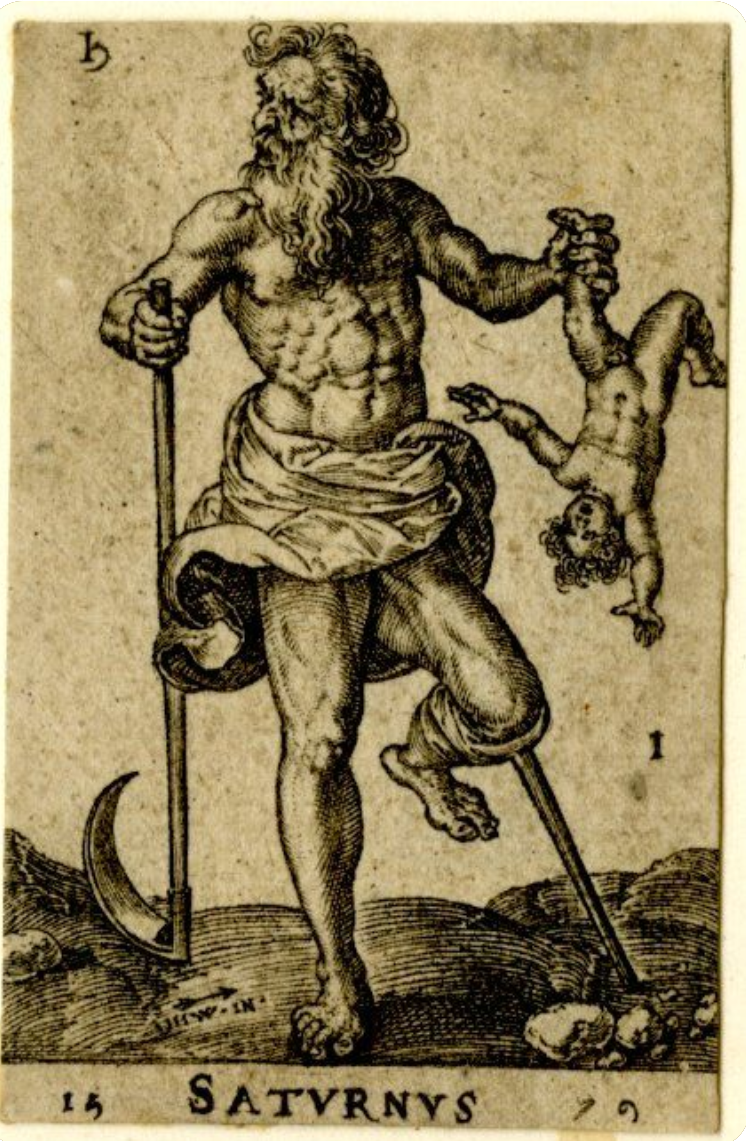
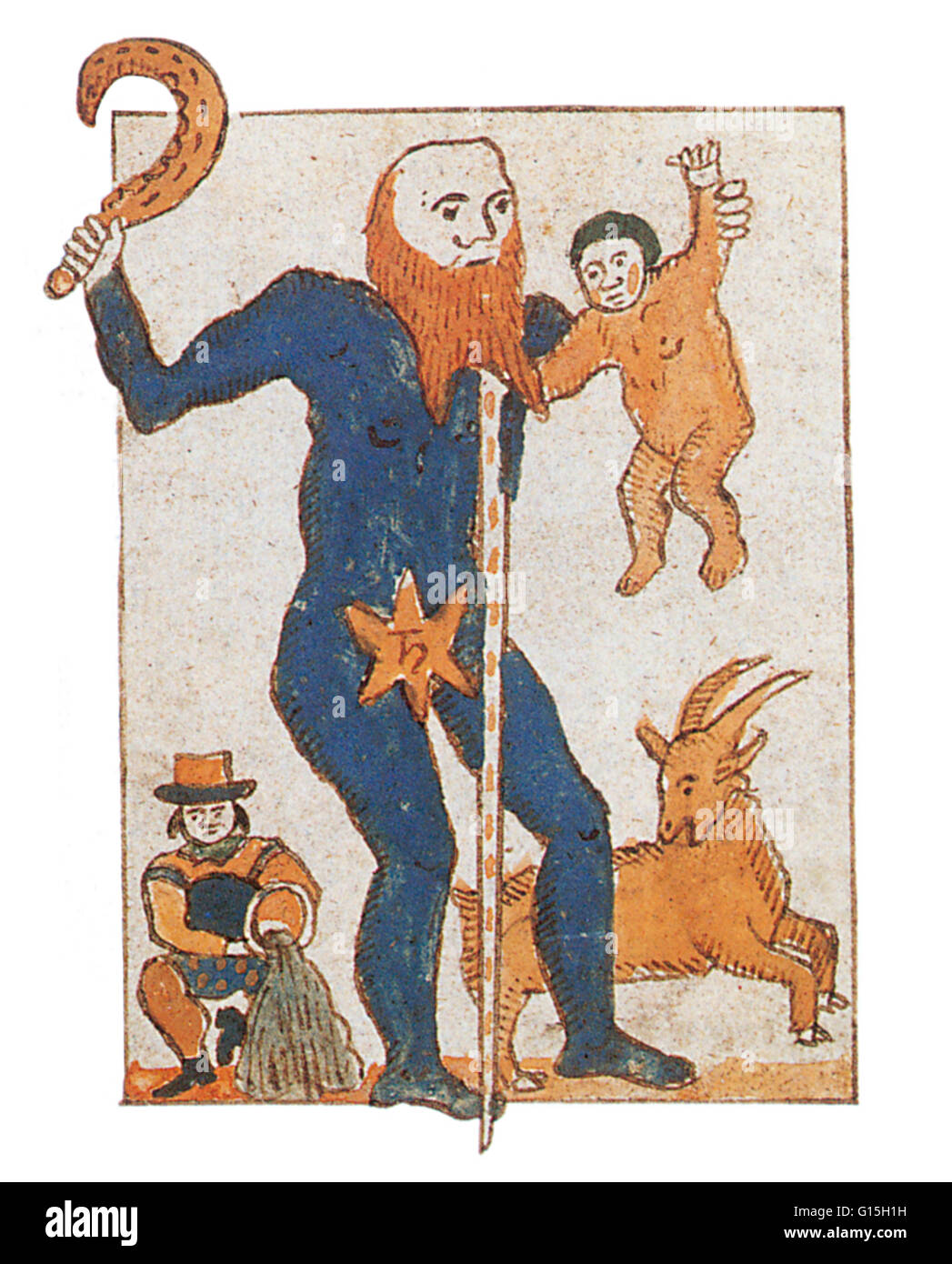
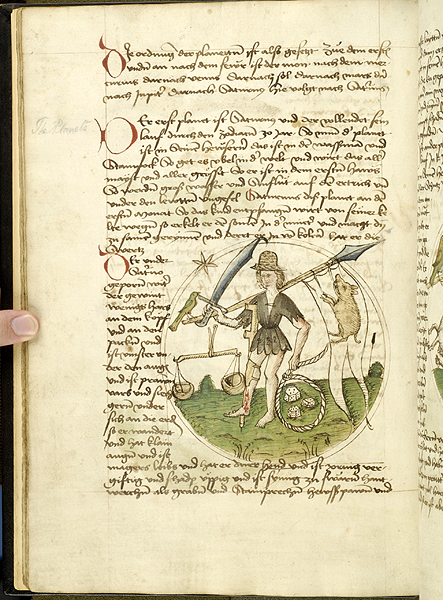
And for fun, here are some pics of Saturn (who also eats his own children):
Lame with crutch, about to eat that baby
Lame, with star over his castration and difficult-to-see crutch, about to eat that baby
Bloody leg wound
___________________________________________
* In Proto-Indo-European theory (I know, I know) something like Stha- is said to be the original source of things like sthamba (pillar), stake (post), stand (to be firm), stable (to be firm), etc etc.
|
|
| |
|
|
|
Boreades

In: finity and beyond
|
|
|
|
We may have some AEL readers who are fluent in Kurdish or Persian. In which case, they (and others) may be amused by the following linguistic trivia.
It seems that our Sir Keir Starmer has a first name that in Persian is a vulgar word for a man's penis.
Etymology
From Middle Persian [Book Pahlavi needed] (kyl /kir/, “penis”). Cognate with Khotanese [script needed] (kira, “membrum virile”), Northern Kurdish kîr, Central Kurdish (kêr /kr/), Zazaki kir and Northern Luri (kr). Note also Middle Armenian (klir).
Noun
• (kêr) (plural)
(anatomy, vulgar) penis, cock, prick
Some might say this is appropriate for our foreign policy.
|
|
| |
|
|
|
Mick Harper
Site Admin
In: London
|
|
|
|
|
Talking of lame people, Hatty and I discovered that the three-legged stool had some significance in esoteric studies but of what, we were never able to identify. It may be connected to one good leg/ one pegleg/ one crutch.
|
|
| |
|
|
|
|
 The Library Index
  FAQ
FAQ  Search
 Register
 Profile
  Log in to check your private messages
  Log in
